Removing Barriers, Building Belonging: How Family-Inclusive Engagement Supports Online Learner Success
Published by: WCET | 8/27/2026
Tags: Online Learning, Student Success
Published by: WCET | 8/27/2026
Tags: Online Learning, Student Success
By Aunjelique Andersen
When we think about learner engagement in online education, one question continues to guide our work: What barriers are we unintentionally creating for the students we most want to support?
Global Connections, Washington State University Global Campus’ student involvement program, observed a common situation many online students find themselves in: They are balancing coursework while raising children, caring for family members, and managing careers. WSU Global Campus offered virtual opportunities for students to connect outside the classroom, yet over time notice that some students, particularly parents, were participating less than expected.
It wasn’t for lack of interest; it was because life kept showing up. Children wandered into Zoom calls. Bedtime routines conflicted with events. Parents apologized for interruptions or stopped attending altogether. We had unintentionally created engagement opportunities that required students to separate their identities as learners from their identities as caregivers.
In 2023, that realization became what is now the Cougs & Cubs program. Instead of asking parenting students to fit into traditional engagement models, we considered: What if we designed programming that welcomed their families rather than expecting them to leave family responsibilities at the virtual classroom door?
The answer transformed how students connect with one another and with the university. Monthly virtual sessions featured children’s books exploring themes such as belonging, empathy, inclusion, and cultural awareness. Families read together, discussed the stories, and participated in activities designed for both parents and children.
As the program evolved, events like Cookies & Canvas paint nights and other hands-on experiences were added, mailing activity kits to participants before each session. Creating, building, and exploring together made the virtual environment feel more personal, interactive, and engaging.
The cost of these programs is supported by the services and activities fees collected by the university. (Under Washington State law, services and activities fees are separate from tuition and are intended to fund student activities and programs at public colleges and universities.) This funding structure allows Global Connections to provide Cougs & Cubs programming and materials, helping ensure that cost does not become another barrier to family-inclusive engagement.
One of the biggest lessons we learned was that meaningful engagement isn’t created by adding more programming; it’s created by removing barriers. When students no longer had to worry about finding childcare or apologizing because a child appeared on camera, participation became more natural. Families returned month after month, with 8–12 children regularly joining sessions, while others attended as schedules allowed.
Perhaps the most rewarding part of this journey has been watching the program evolve. Students expressed the desire for even more educational, hands-on experiences for their children, which resulted in Cougs & Cubs Science Saturdays, where families explored STEM concepts through experiments and activities focused on engineering, chemistry, space, and more. Continued enthusiasm for Science Saturday led to the first Cougs & Cubs Summer Camp, a week-long virtual STEM experience that welcomed 22 participants.
The excitement surrounding these programs reinforced another important lesson: Sometimes our youngest participants become our strongest ambassadors. When children are eager to participate, families are even more likely to stay engaged. The program also highlighted another need that often goes unnoticed. Parenting students don’t just need activities for their children; they also need opportunities to connect with one another.
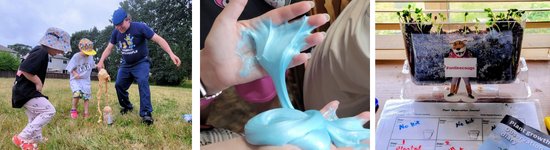
That insight inspired Cougs & Cubs Caregivers Night-In, a dedicated space where students could discuss the realities of balancing school and family life, exchange ideas, and discover campus resources. These conversations weren’t centered on coursework; they were centered on belonging. In an online environment, where isolation can quietly affect persistence, intentionally creating opportunities for peer support can make a meaningful difference.
“The club reminded me that I’m not alone in this journey and that there are people who genuinely care about helping each other succeed.”
“[My child] loves being a part of it and always asks, ‘Is it Cougs & Cubs Day?’”
Comments like these remind us that learner success isn’t measured solely by attendance or participation. It’s reflected in whether students feel seen, supported, and valued as whole people.
Looking back, Cougs & Cubs has taught us lessons on engagement and programming:
Many online learners juggle significant responsibilities outside the classroom. As educators and student engagement professionals continue exploring ways to strengthen engagement, we have an opportunity to ask a simple but powerful question:
Cougs & Cubs reminds us that meaningful innovation doesn’t always come from creating something entirely new. Sometimes it comes from recognizing long-standing barriers and intentionally removing them. When we welcome students as whole people, including the families who are part of their educational journey, we create opportunities for connection, belonging, and success that extend far beyond academics. In doing so, we strengthen retention, foster community in online education, and help the next generation see higher education as a place where they belong, too.

Student Ambassador, Washington State University Global Campus